
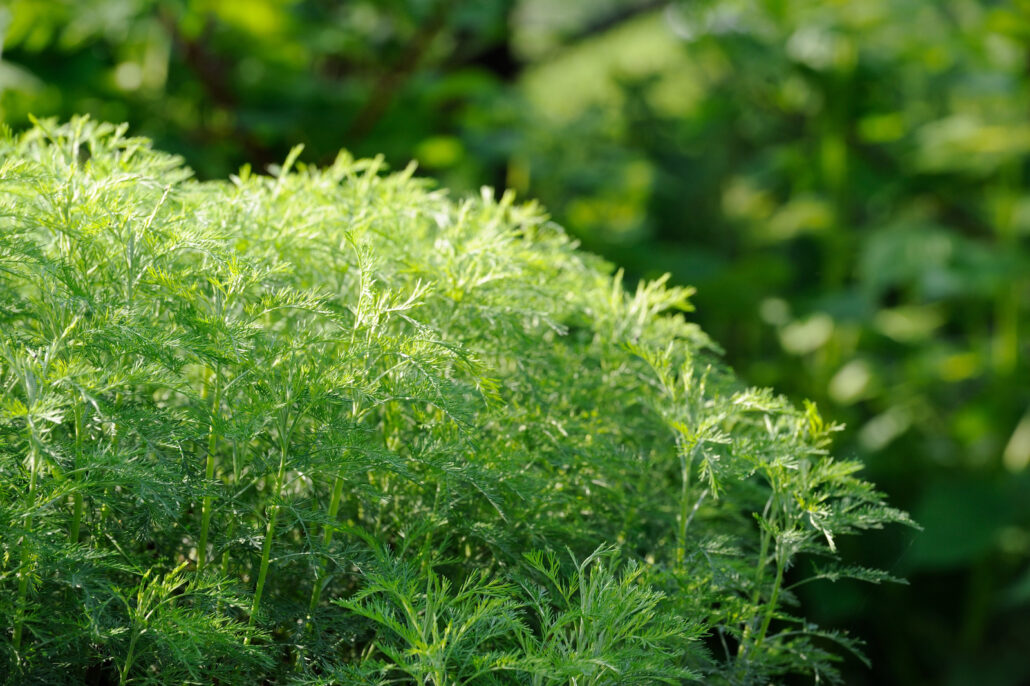
Beautiful blossoming gardens can induce sneezing, itching and watery eyes for some of us. Help is at hand with the regular use of certain medicinal plants that have been shown to reduce and alleviate symptoms of hay fever.
Traditional plant medicine for the relief of hay fever include Southernwood herb, Ginger Root and Nigella Seed which have all been shown to relieve allergic rhinitis symptoms. Our medical herbalists from the National Institute of Medical Herbalists (NIMH) also recommend both Elderflower and Elderberry for allergy relief – our native small tree common to hedgerows and one that can be grown in gardens and even in pots if they are pruned regularly. We include some of these science-based plant medicines in our Allergy Tincture and Southernwood, Artemisia abrotanum is a main component.
Southernwood is a very attractive shrub in the daisy family and a herb garden favourite with its highly aromatic feathery silver-green leaves. This genus also contains the more widely known aromatic medicinal herbs wormwood and mugwort. Southernwood’s lovely scent is distinctly ‘cola’ like, and it’s often enjoyed here by the physic garden team as a fresh tea.
In folklore southernwood was used in love spells to arouse lust. It may promote hair growth – its folk name Lad’s Love was due to ability to encourage beard growth, and it was used in male rites of passage.
In plant medicine historically it’s been used as a tonic, stimulant and antiseptic, and particularly for upper airway disease. It’s also said to remove pimples and was used as a face wash in Mayday rituals to encourage beauty. It’s often used as a moth repellent.
Scientific research shows that southernwood is tick repellent, contains spasmolytic flavonols (in vitro) and in a nasal spray is clinically effective in the management of allergic rhinitis. In a study published in the journal Phytomedicine a southernwood nasal spray produced significant nasal and ocular symptom relief that was rapid and almost complete after the first application. The nasal spray was well tolerated after repeated use and the duration of symptom relief ranged up to several hours after administration. The mechanism requires more research, but is related to antiallergenic, anti-inflammatory, expectorant, and spasmolytic properties of the compounds in southernwood such as terpenes, flavonols, coumarins, and cinnamic acid derivatives, particularly 1,8-cineole, linalool, davanone, scopoletine, and casticin.
Southernwood is therefore an option for those seeking additional support in managing allergic rhinitis, particularly where conventional treatments may be insufficient or not well tolerated. Further controlled studies are needed to explore this potential.
