
Growing, harvesting and preparing two medicinal roots at Dilston Physic Garden – one a traditional medicinal archaoephyte, and the other introduced to British horticulture much more recently, but both used medicinally through history.
Adapted from our ‘Grow Your Own Physic Garden’ book and our new book out in 2027 – ‘Roots, Remedies and Rituals’. Thank you to David Taylor, Juliet Scott and Joshua Parry for the botanical photography.
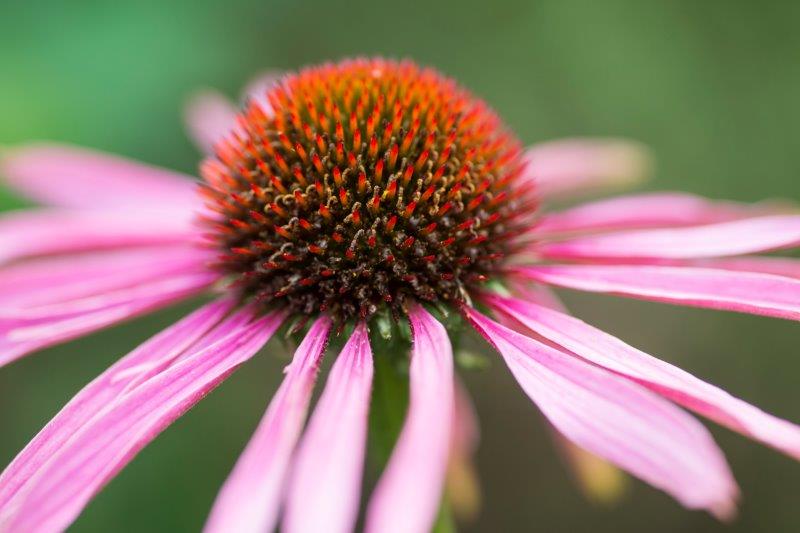
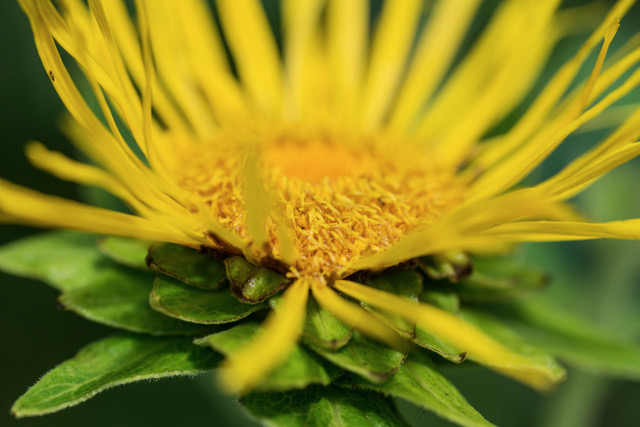
There’s much more to a medicinal plant than what we see above ground. And for some medicinal plants it’s what’s under the ground that makes the medicine.
But even our familiar root veg plants like carrot, beetroot and parsnip have health benefits. With their array of medicinal compounds, these three roots support gut, heart and immune health, with some of these benefits now supported by clinical research.
For our Roots Day at Dilston Physic Garden though, we’re uprooting just two medicinal plants – echinacea and the less familiar elecampane – washing, cutting and drying their roots, in preparation for making our immune-supportive tea and tincture. Along the way, we’ll look at how these plants grow, how they’ve been used medicinally through history, and what scientific studies in the lab and in people tell us about their benefits.

Beginning in the garden
We look at the plants, leaves, stems and flowers, ensuring we have the correct identity. Now that the above ground plant has died back (in autumn and winter), we lift and divide an established (2-3 year old) plant of each, saving divisions to replant for future harvests.
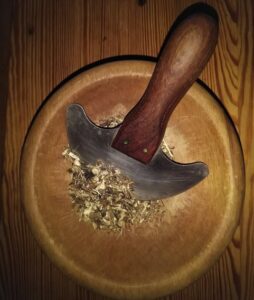
With the roots out of the ground, we brush off the soil, wash them, explore their smell and taste, then cut the clean roots while fresh and use them either to make a fresh tincture, or spread them in a single layer to dry, with good airflow – preferably in a dehydrator – and label them. Only when thoroughly dry should they go into labelled, airtight containers.
We then explore their growing, preparing and storage conditions, as well as traditional uses, and the science behind them. And at our Roots Day in the physic garden there’s a little of each root for volunteers to take home for their own preparation.
Echinacea - the purple coneflower
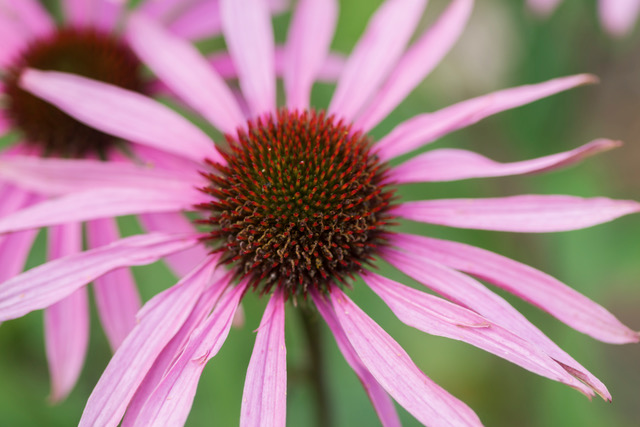
Medicinal Species: Echinacea purpurea (broad-leaved coneflower) and Echinacea angustifolia (narrow-leaved coneflower) and, lesser grown in Britain, Echinacea pallida (pale purple coneflower); Family: Asteraceae.
Echinacea is a North American native medicinal plant growing naturally in prairies. There are 9 recognised species. It was introduced into British horticulture around 1690 by English clergyman and naturalist John Banister – this makes it a non-native but widely cultivated UK plant species.
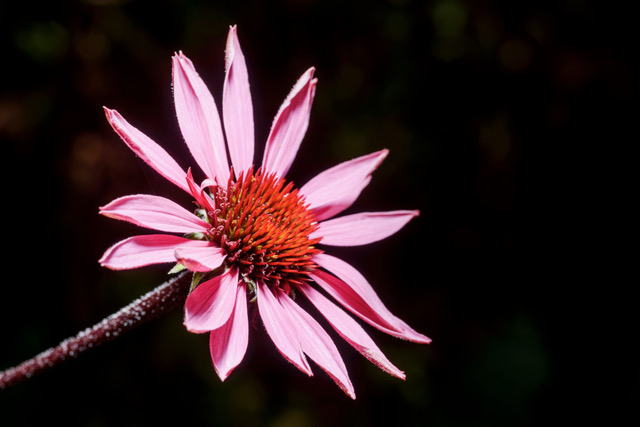
Echinacea is a perennial with purple petalled flowers and spiny, orange-brown central cones. Its name comes from the Greek echinos, meaning hedgehog. E. purpurea has broader leaves and a fibrous root system; E. angustifolia has narrower leaves and a more prominent taproot. E. pallida has long narrow leaves, narrow drooping and paler petals, and a prominent taproot like E. angustifolia. All attract pollinators and the ‘dead’ heads provide food for birds over winter!
Growing echinacea
Grow E. purpurea in full sun and deep, well-drained soil with some organic matter; it also tolerates some shade. E. angustifolia prefers full sun and especially well-drained, open soil. Both will dislike any UK winter waterlogging, and can be grown in deep containers with good drainage.
Traditional use
Indigenous peoples of North America used different echinacea species for a range of complaints, including wounds, bites, toothache and sore throats. Later American and European herbalists adopted the plants, which today are chiefly associated with immune support and the prevention and treatment of colds.
Echinacea though has also been used for boils, fever and serious infections, including septicaemia – though this historical use should not be read as a recommendation for treating sepsis – which requires urgent medical care!
Traditional accounts and modern studies refer to different species, plant parts and preparations.
What scientists today say
Clinical research: Echinacea has been investigated in many controlled trials for preventing and treating upper respiratory infections, particularly the common cold and preparations have shown benefits, but findings vary with the species, preparation and study. The evidence does not support treating all echinacea products as equivalent!
Mood research: Small controlled trials of standardised E. angustifolia root extracts have investigated its effect on anxiety and mood. A six-week trial found greater improvements in emotional wellbeing and positive and negative mood scores than placebo, although its main anxiety measure did not improve more than placebo. Other smaller trials have reported reductions in anxiety. Results are mixed and again relate to the particular extracts tested.
Laboratory research: Echinacea extracts and their constituents have demonstrated immunostimulatory, immunomodulatory and anti-inflammatory activity, including effects on immune cells such as macrophages and inflammatory signalling molecules such as TNF-alpha. Antiviral, antioxidant and analgesic effects have also been investigated. Some alkylamides interact with cannabinoid CB2 receptors and regulate inflammatory cytokines, while isolated echinacoside has demonstrated neuroprotective effects in experimental models of Alzheimer’s and Parkinson’s diseases. Anxiety reducing effects of extracts have also been studied.
Key chemicals Polysaccharides and glycoproteins, investigated for immunostimulatory effects (including macrophage activation); alkylamides, including isobutylamides, for immunomodulatory and anti-inflammatory activity; caffeic acid derivatives, including echinacoside, for antioxidant and anti-inflammatory effects, with echinacoside also investigated for immunomodulatory and neuroprotective activity; and polyacetylenes, particularly abundant in E. pallida roots, investigated for cytotoxic activity against cancer cells.
Two species used in Britain – what’s the medicinal difference?
The roots of these two echinacea species are not chemically identical, but both have a hallmark tongue-tingling sensation due to chemicals called alkylamides. E. angustifolia roots are rich in both alkylamides, and echinacoside. While E. purpurea roots contain abundant alkylamides, but little echinacoside. While the root of the third species used medicinally – E. pallida, contains mainly echinacoside and very few alkylamides.
But, these distinctions apply to their roots only, so while E. pallida roots are almost devoid of alkylamides, the aerial parts of all three species have similar levels of alkylamides. And of course, both echinacoside and alkylamide final concentrations vary with genetics, cultivation, harvest time, extraction methods and storage conditions.
So these three closely related medicinal plants have different root chemistry. And while all are used for colds and flus and immune support, purpurea is often used as the flowering herb as well as the root, and angustifolia has a stronger tradition of root use – confering with their chemistry, and with echinacoside being a contributor to the medicinal effect.
So we see that not only the plant species but also the plant part can change the medicinal value of the preparation, and why findings from controlled trials of, for example, the mood benefits from standardised E. angustifolia root extracts, don’t necessarily apply to a preparation made from our freshly harvested roots, or to E. purpurea or E.pallida roots.
Drying the roots
Drying and drying conditions alter the concentrations of medicinal compounds. In echinacea roots, research has shown differences between species. In E. purpurea, alkylamides are generally well preserved during drying – studies find similar amounts extracted from fresh and dried roots. However, cichoric acid (which has a number of bioactions) can be more sensitive to drying temperature. In E. angustifolia, echinacoside can decline substantially at higher drying temperatures, although alkylamides are relatively stable. And! Prolonged storage above 23oC can lead to large losses of alkylamides, making storage conditions as important as drying itself.
Using the herb for health
The root is traditionally used in teas, tinctures, ointments and compresses. As we’ve said, the leaves and flowers of E. purpurea are also used.
Some people take an echinacea tincture when they feel a cold coming on, or take it for a short period over the winter months to support cold and flu prevention.
The amount used depends on the species, plant part, preparation and concentration, so there isn’t necessarily one dose that applies to every echinacea product – always read the label. At the physic garden we make a 1:3 Echinacea and Honey Tincture (one part plant material to 3 parts 45% alcohol) – and we make it with both the root and the herb of E. purpurea – and this is generally taken 1-3 times daily for short-term use.
Safety: Echinacea can cause allergic reaction, particularly in people sensitive to daisy-family plants. Seek advice before using it alongside immunosuppressant medicines. For short term use only – 3 months maximum. Avoid medicinal use during pregnancy or breastfeeding. Caution: Always confirm plant identity before harvesting and consult a qualified NIMH medical herbalist or other healthcare professional for individual advice on medicinal use if you have any medical condition, allergy, are taking any medication or under medical supervision, or are trying to conceive, pregnant or breast feeding.
Elecampane - the elfwort
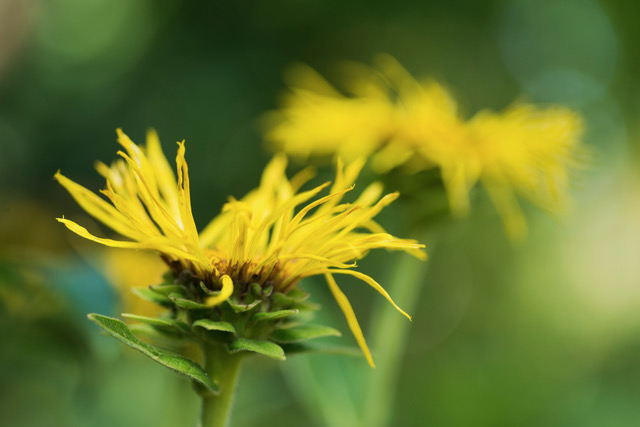
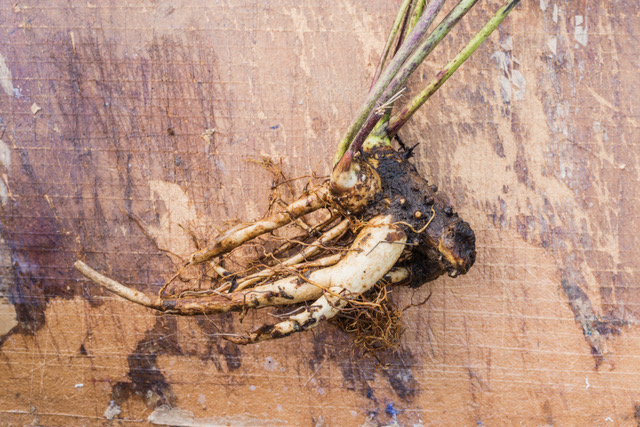
Species: Inula helenium L. Family: Asteraceae
Elecampane is native to Western and Central Asia extending into southeastern Europe. Historical evidence places it in the British Isles before AD990 and by the medieval period its medicinal use was established in Britain. This makes elecampane an archaeophyte – a non-native plant introduced before AD1500. It was found growing wild outside cultivation by the nineteenth century and it persists in the wild in some localities (it’s been found growing in abandoned houses, old gardens, church ruins and former crofts), and so the status of its population as naturalised may vary.
Growing elecampane
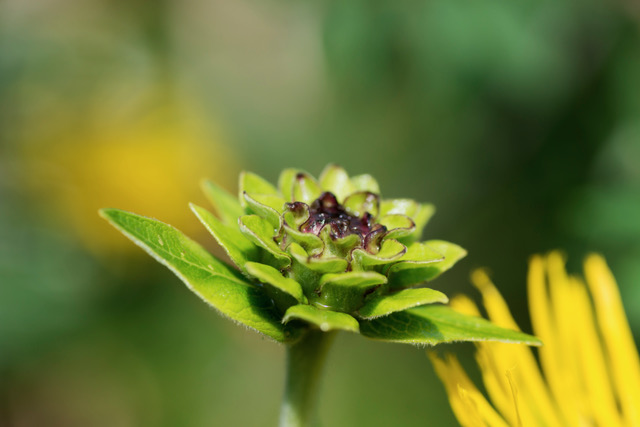
Elecampane is as equally lovely a plant to grow and get to know as echinacea is – a tall perennial, often reaching around two metres, with large leaves, soft and hairy underneath, and yellow, daisy-like flowers. Below ground (like echinacea) are thick, aromatic roots, and rhizomes – underground stems.
Give it room! It grows best in deep, fertile, moisture-retentive but well-drained soil, in full sun or partial shade. Sow seed in spring or divide established plants in spring or autumn.
Traditional use – and a little folklore
Elecampane was known as elfwort or elf-dock. In folklore it was associated with protection against “elf-shot”: sudden, unexplained illness (probably from bacteria and viruses), or injury thought to be caused by elves and their darts.
Herbalists today use it chiefly as a warming respiratory herb. The root and rhizome are chosen for coughs where mucus is thick or difficult to bring up, including lingering bronchial catarrh and bronchitis. It may be combined with herbs such as white horehound or thyme, and prepared as a tincture, decoction, syrup or losenge.
It’s also used as an aromatic digestive bitter for poor appetite, wind, bloating and heaviness after meals. Preserved elecampane root has a long history of use to aid digestion – and it certainly has a stimulatory taste! Some herbalists choose it when a lingering chest complaint goes together with low appetite and fatigue.
Other traditional uses: Beyond coughs, chest complaints and digestion, elecampane has been used in washes and ointments for itching, scabs and irritated skin. Its old name ‘horse-heal’ reflects its use for animals’ skin conditions. Dioscorides also recorded root preparations for venomous bites and swellings.
What scientists today say
Controlled clinical trials: A placebo-controlled trial in children found that a syrup containing elecampane, acacia honey and three other plant extracts – mallow (Malva sylvestris), greater plantain (Plantago major) and Mediterranean everlasting (Helichrysum stoechas) – reduced cough scores. Because this was a mixture, we can’t say how much elecampane contributed to the effect.
Laboratory research: Root extracts and isolated sesquiterpene lactones have shown activity against bacteria, including Staphylococcus aureus. Studies have also investigated anti-inflammatory and macrophage activity relevant to the respiratory system and infection, alongside antioxidant, antifungal, anthelmintic (against worms) and anticancer activities. Researchers also examine how extraction methods change the amounts of these compounds in a preparation.
Key chemicals: Sesquiterpene lactones, particularly alantolactone and isoalantolactone, investigated for antimicrobial and anti-inflammatory activity, as well as cytotoxic effects against cancer cells. Inulin, a prebiotic polysaccharide that supports beneficial gut bacteria; and phenolic compounds, including caffeic and chlorogenic acids, investigated for antioxidant and anti-inflammatory activity.
Preparation: The root can be prepared as a decoction, tincture or syrup. We dry our elecampane root to use in our Immune Tea – and as well as adding its medicinal benefit, like echinacea it adds such a lovely aromatic zing to the tea flavour.
Safety: Elecampane can cause allergy or skin sensitisation, especially in people sensitive to daisy-family plants. Avoid medicinal use during pregnancy or breastfeeding, and seek qualified advice before taking it alongside medication or with an existing health condition – CAUTION: Always confirm plant identity before harvesting and consult a qualified NIMH medical herbalist or other appropriate healthcare professional for individual advice on medicinal use if you have any medical condition, allergy, are taking any medication or under medical supervision, and are trying to conceive, pregnant or breast feeding.
Further reading
Royal Horticultural Society plant profiles: Inula helenium, Echinacea purpurea and Echinacea angustifolia.
European Medicines Agency: species-specific echinacea root and herb monographs.
Cochrane Review (2014): Echinacea for preventing and treating the common cold.
Lopresti and Smith, Journal of Affective Disorders (2021): controlled trial of E. angustifolia extract for anxiety and mood.
Perry and colleagues (2001): comparison of the chemical components of echinacea species.
Carnevali and colleagues, BMC Pediatrics (2021): placebo-controlled trial of the multi-ingredient KalobaTUSS cough syrup.
