
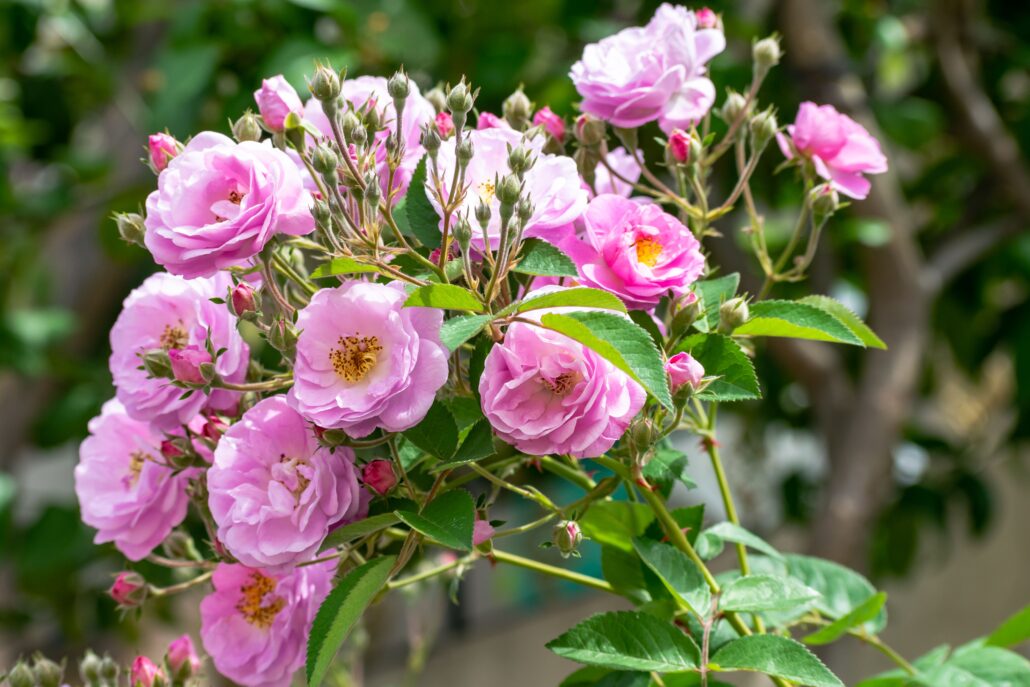
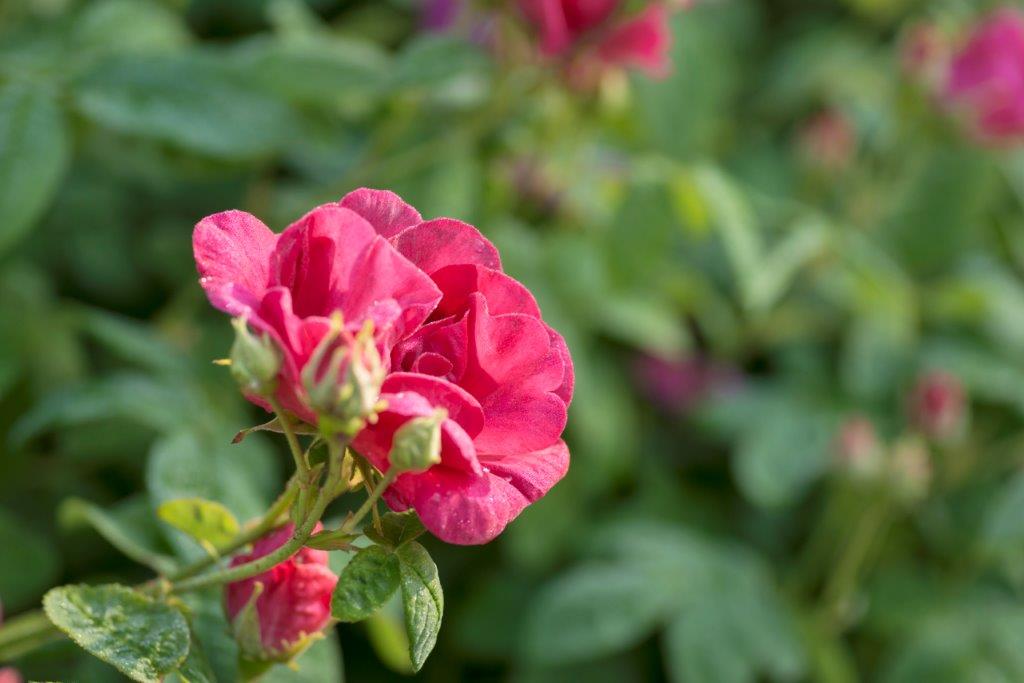
Apothecary’s rose Rosa gallica var. officinalis. Damask rose Rosa × damascena, and Dog rose Rosa canina
The UK’s much-loved heritage garden plant is being rediscovered as a medicinal plant for wellbeing through scientific research – particularly for the mood improving effects of the aromatic oil and flower extracts of the Damask rose.
Heritage
Used medicinally for thousands of years, with evidence extending back to ancient Assyrian clay tablets, roses are renowned for lifting the spirits. This queen of flowers has traditionally symbolised love, reconciliation and sensuousness. Rose petals were eaten at Roman festivities, and roses were valued in medieval monastic gardens for both their spiritual significance and their healing powers.
The Persian physician Avicenna prepared rose water for the heart and brain and centuries later, the English herbalist John Gerard upheld this by writing: “The distilled water is good for the strengthening of the heart, and refreshing of the spirits, and likewise for all things that require a gentle cooling.”
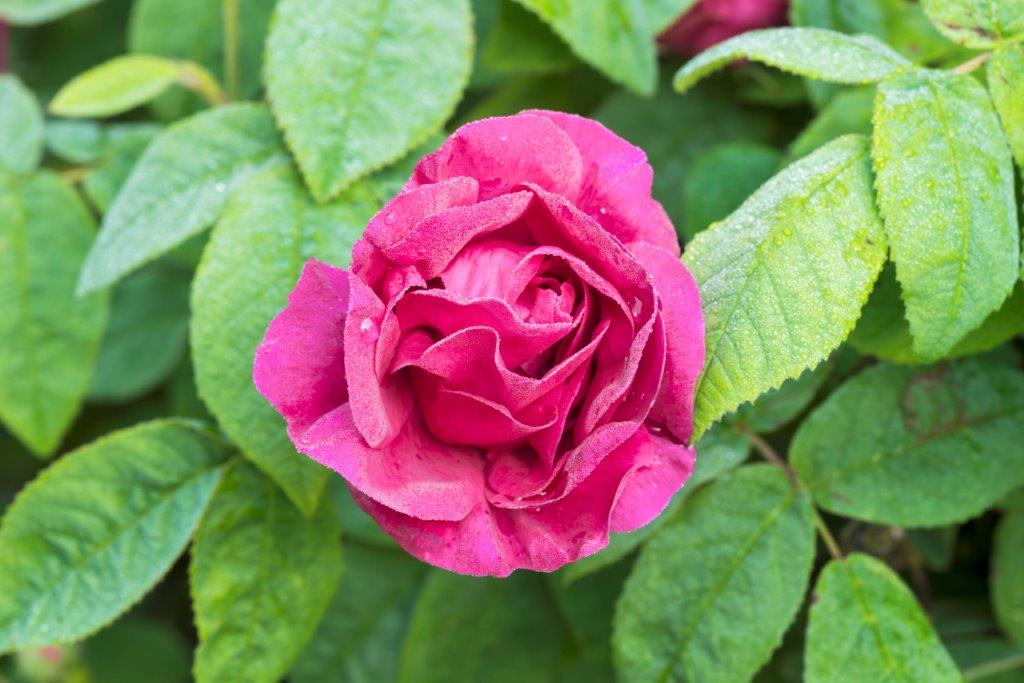
The apothecary’s rose, Rosa Galicia var. officinalis, is a perennial shrub growing to around 1.5 metres, with thorns, serrated leaves and richly scented, deep-pink flowers. It has been cultivated medicinally for centuries. However, most modern research into the mood effects of rose has concentrated principally on the Damask rose, Rosa × damascena, particularly its essential oil, aromatic preparations and petal extracts.
The strongly scented Provence rose, Rosa × centifolia, is also cultivated for perfumery and rose oil, while the hips, traditionally used as food and medicine often come from the wild dog rose, Rosa canina. Rose hips have a different chemistry and evidence base from Damask rose petals and oil.
What scientists say
An initial controlled human study showed that rose oil, applied to the skin, produced physiological changes consistent with relaxation, including reductions in breathing rate and systolic blood pressure. Participants also described themselves as calmer, more relaxed and less alert than those receiving the placebo oil.
Randomised controlled trials have since reported that Rosa damascena aromatherapy reduced situational anxiety during labour, and improved anxiety and sleep quality among coronary care patients, operating theatre staff, and people recovering from burns. These findings related to short-term anxiety in particularly stressful or clinical situations, rather than the treatment of a diagnosed anxiety disorder.
A 2021 systematic review and meta-analysis of randomised controlled trials found that R. damascena, administered in various forms, significantly reduced temporary anxiety, depression and stress, but did not significantly reduce ‘trait’ or more enduring anxiety.
A newer 2025 meta-analysis on R. damascena aromatherapy, pooled 28 randomised controlled trials. It found significant reductions in anxiety and stress, and an improvement in sleep quality and it also found a small reduction in mean arterial blood pressure.
There is further evidence for oral rose preparations in a particular population. In a 2025 triple-blind, placebo-controlled trial, 82 naturally menopausal women received either 500mg of R. damascena extract or placebo twice daily for eight weeks. Depression, anxiety and stress scores all decreased significantly more in the rose group.
Beyond mood effects, controlled trials of standardised Rosa canina hip powder suggest benefit for osteoarthritis pain, stiffness and physical function – and one trial also reported improved general wellbeing, including mood, sleep and energy, though these were secondary outcomes. In a separate controlled study, a high daily intake of rosehip powder modestly lowered systolic blood pressure, total cholesterol and LDL cholesterol,and some, but not all studies show glucose lowering effects.
In other effects beyond mood, topically applied rosehip oil improved minor skin injuries and the appearance of postoperative scars in preliminary controlled studies, and this backed up by wound-healing and skin-repair activity in laboratory studies.
How does rose lift mood?
Lab studies of R. damascena essential oil show it reduced depression-like behaviour, increased serotonin in the hippocampus and lowered stress-related hippocampal neuronal damage, suggesting a contribution from serotonin signalling. Other preclinical studies report antidepressant, anti-anxiety, sleep promoting, antioxidant, anti-inflammatory, analgesic, anticonvulsant and neuroprotective effects of R. damascena extracts or essential oil.
Rose has a traditional reputation as an aphrodisiac and preclinical studies suggest that its essential oil may increase testosterone production and improve sperm count and motility. In a placebo-controlled trial involving men with major depression and SSRI-induced sexual dysfunction, rose oil improved sexual function and was associated with greater improvements in depressive symptoms than placebo. Rose may therefore have effects on mood and sexual wellbeing, and can be considered a safe option to explore in supporting SSRI associated sexual dysfunction.
Bioactive compounds
Damask rose essential oil contains a mix of volatile compounds, including citronellol, geraniol and Nero. Of these, geraniol has been shown to increase the calming GABA inhibitory signal in lab studies- the action of the oil probably involve several compounds and pathways.
Its petals also contain phenolic compounds, including flavonoids and tannins. The chemical profile of rose essential oils and extracts vary with the cultivar, growing conditions, time of harvest and method of extraction.
Rosehips have a different chemical profile, containing vitamin C, carotenoids, flavonoids and other polyphenols. Evidence of the hips of Rosa canina can therefore be distinguished from research into the petals and essential oil of R. damascena.
How to enjoy rose
Rosebuds and petals make a beautiful aromatic botanical tea. Fresh edible petals can be added to salads or desserts, and rosewater brings fragrance to cakes, cocktails and drinks.
Dog rose hips are made into the winter immune boosting rose hip syrup and also jellies to serve with toast, cheese or red meat.
Damask rose essential oil can be enjoyed in a diffuser or, when diluted in aromatic lotions and body preparations.
Culinary quantities of rosebuds, petals, hips and rose water are well tolerated. The essential oil, though one of the most beautiful oils to use, is much more concentrated: use only in drops in the bath, on the pillow, and at 2% dilution on the skin, do not swallow, and keep the bottle out of children’s reach.
Finally the best way to enjoy rose is to nurture and harvest your own – rose grows well in sunny spots on windowsills, back-yards and gardens. Our native roses are dog, friend, burnet and sweet briar, but the apothecary rose is also one to grow. Harvest and dry buds, petals and hips for your own use.
